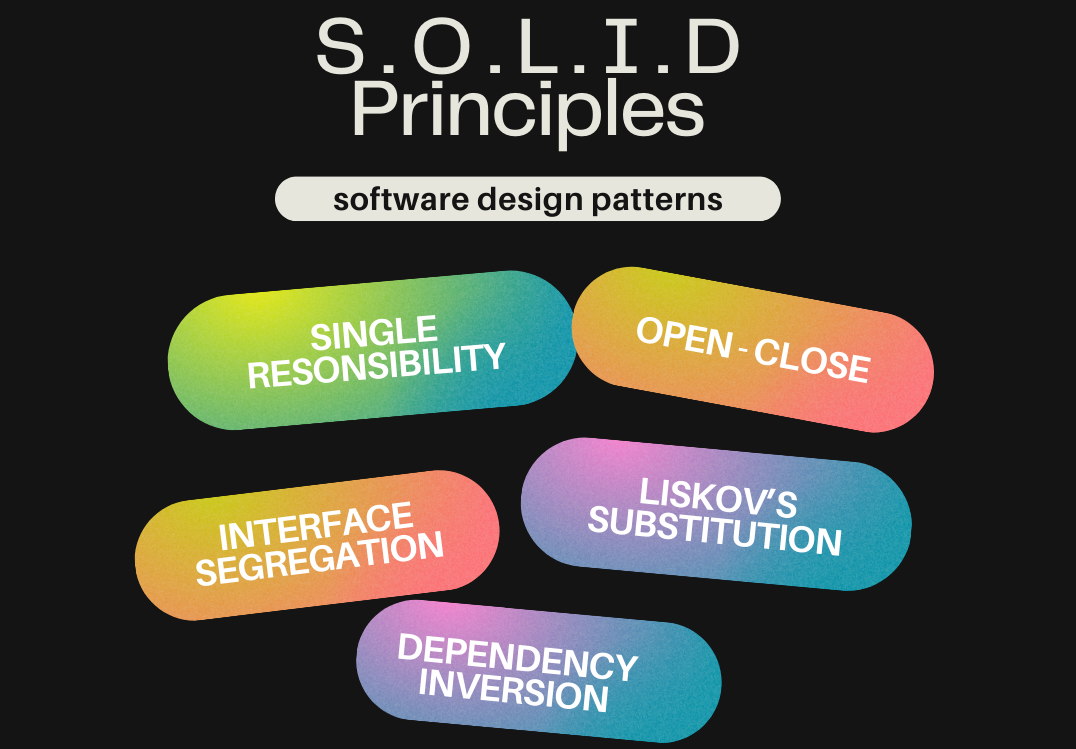
Introduction: Why SOLID Matters Single Responsibility Principle (SRP) Open/Closed Principle (OCP) Liskov Substitution Principle (LSP) Interface Segregation Principle (ISP) Dependency Inversion Principle (DIP) Summary & Key Takeaways Mastering SOLID Principles: The Foundation of Maintainable Architecture Author: Wiktor Gindorowicz | Technical Scrum Master & Software Engineer Published: October 2026 Writing code that merely compiles and passes tests is only half the battle. In modern enterprise software development, requirements change rapidly, systems scale, and technical debt accumulates if code is tightly coupled. The SOLID principles—introduced by Robert C. Martin (Uncle Bob)—represent five fundamental design principles for writing clean, understandable, and highly maintainable object-oriented software. In this article, we will break down each principle with practical Java implementations and architectural context. Introduction: Why SOLID Matters When applications grow, they often suffer from rigidity (hard to change), fragility (changes break unrelated features), and immobility (difficult to reuse code in other projects). SOLID provides a mental framework and structural guidelines to decouple components, making systems resilient to change. Single Responsibility Principle (SRP) Core Concept “A class should have one, and only one, reason to change.” SRP states that a software module or class should be responsible for a single part of the functionality provided by the software, and that responsibility should be entirely encapsulated by the class. If a class handles database operations, business logic, and PDF generation simultaneously, any change in reporting format forces a modification to core business logic. Java Implementation (Correct Approach) Separating business logic from persistence and reporting:
|
1 2 3 4 5 6 7 8 9 10 11 12 13 14 15 16 17 18 19 20 21 22 23 24 25 |
// Business Logic Domain Model public class Order { private final String orderId; private final BigDecimal totalAmount; public Order(String orderId, BigDecimal totalAmount) { this.orderId = orderId; this.totalAmount = totalAmount; } public BigDecimal getTotalAmount() { return totalAmount; } public String getOrderId() { return orderId; } } // Separate Responsibility: Database Persistence public class OrderRepository { public void saveToDatabase(Order order) { System.out.println("Saving order " + order.getOrderId() + " to PostgreSQL database."); } } // Separate Responsibility: Invoice/Report Generation public class InvoicePrinter { public void printPdf(Order order) { System.out.println("Generating PDF invoice for order: " + order.getOrderId()); } } |
Open/Closed Principle (OCP) Core Concept “Software entities should be open for extension, but closed for modification.” You should be able to extend the behavior of a class or component without altering its existing source code. This is typically achieved through polymorphism—using abstract classes or interfaces. Java Implementation Instead of using massive switch/case statements inside a service every time a new discount type arrives, we introduce a strategy-like interface:
|
1 2 3 4 5 6 7 8 9 10 11 12 13 14 15 16 17 18 19 20 21 22 23 24 25 |
import java.math.BigDecimal; // Open for extension through new implementations public interface DiscountStrategy { BigDecimal applyDiscount(BigDecimal amount); } public class VipDiscount implements DiscountStrategy { @Override public BigDecimal applyDiscount(BigDecimal amount) { return amount.multiply(BigDecimal.valueOf(0.85)); // 15% off } } public class SeasonalDiscount implements DiscountStrategy { @Override public BigDecimal applyDiscount(BigDecimal amount) { return amount.multiply(BigDecimal.valueOf(0.90)); // 10% off } } // Closed for modification (OrderService doesn't change when a new discount type is added) public class CheckoutService { public BigDecimal calculateFinalPrice(BigDecimal baseAmount, DiscountStrategy strategy) { return strategy.applyDiscount(baseAmount); } } |
Liskov Substitution Principle (LSP) Core Concept “Functions that use pointers or references to base classes must be able to use objects of derived classes without knowing it.” Subclasses must maintain the behavioral expectations of the base class. If a class overrides a method in a way that breaks functionality or throws unexpected unsupported operations, it violates LSP. Java Implementation A classic violation is the “Square-Rectangle” problem. A better approach is focusing on clean abstraction:
|
1 2 3 4 5 6 7 8 9 10 11 12 13 14 15 16 17 18 19 20 21 22 23 |
public interface Renderable { void render(); } public class VectorGraphic implements Renderable { @Override public void render() { System.out.println("Rendering scalable vector graphic."); } } public class RasterImage implements Renderable { @Override public void render() { System.out.println("Rendering raster pixel image."); } } // Any Renderable can be safely substituted anywhere without breaking the caller public class Canvas { public void drawElement(Renderable element) { element.render(); // Safe substitution } } |
Interface Segregation Principle (ISP) Core Concept “Clients should not be forced to depend upon interfaces that they do not use.” Instead of creating massive, monolithic interfaces (fat interfaces), break them down into smaller, client-specific role interfaces. A class implementing an interface should not be forced to implement dummy methods it doesn’t need. Java Implementation
|
1 2 3 4 5 6 7 8 9 10 11 12 13 14 15 16 17 18 19 20 21 22 |
// Bad: Fat interface forcing implementation of unused methods // interface Worker { void work(); void eat(); void code(); } // Good: Segregated interfaces public interface Workable { void work(); } public interface Feedable { void eat(); } public class HumanWorker implements Workable, Feedable { @Override public void work() { System.out.println("Human working on software architecture."); } @Override public void eat() { System.out.println("Human taking a lunch break."); } } public class RobotWorker implements Workable { @Override public void work() { System.out.println("Robot processing automated build tasks 24/7."); } // Robots don't need eat()! No forced empty implementation. } |
Dependency Inversion Principle (DIP) Core Concept “A. High-level modules should not depend on low-level modules. Both should depend on abstractions. B. Abstractions should not depend on details. Details should depend on abstractions.” DIP decouples high-level business logic from low-level infrastructure details (like specific databases, email gateways, or REST clients) by introducing interfaces. Java Implementation
|
1 2 3 4 5 6 7 8 9 10 11 12 13 14 15 16 17 18 19 20 21 22 23 24 |
// Abstraction public interface NotificationSender { void sendNotification(String message); } // Low-level Detail public class EmailNotificationSender implements NotificationSender { @Override public void sendNotification(String message) { System.out.println("Sending email alert: " + message); } } // High-level Module depending on Abstraction (injected via constructor) public class UserService { private final NotificationSender notificationSender; public UserService(NotificationSender notificationSender) { this.notificationSender = notificationSender; } public void registerUser(String username) { System.out.println("User " + username + " registered successfully."); notificationSender.sendNotification("Welcome to the platform, " + username + "!"); } } |
Summary & Key Takeaways Mastering SOLID transforms code from a fragile house of cards into a robust, scalable architecture: S – Keep classes focused on a single responsibility. O – Write code that accommodates new features via extension, not rewriting. L – Ensure subtypes strictly honor base-type behavior. I – Keep interfaces lean and tailored to specific clients. D – Depend on abstractions, not concrete implementations (Inversion of Control). Applying these principles elevates code from functional to enterprise-grade engineering standards.